This guide explains the standard NPS question, its history, common variations, and best practices for using it effectively.
Net Promoter Score (NPS) is one of the most widely used ways to measure customer loyalty, but at its core, it all comes down to a single, simple question. That simplicity is exactly what makes NPS so powerful, and also explains why it’s often misunderstood or underused.
Many teams treat NPS as just another metric to track, without fully understanding how the question works, why it’s structured the way it is, or how to get meaningful insights from it. But when used correctly, NPS survey questions can uncover customer sentiment, highlight friction points, and guide better product and customer experience decisions.
In this guide, we’ll break down exactly what an NPS survey question is, how it works, and how to use it effectively. You’ll learn the standard format, variations you can use in different contexts, and practical best practices to help you collect more accurate, actionable feedback from your customers.
What is an NPS survey question?
An NPS survey question asks customers how likely they are to recommend a company, product, or service to others. It measures satisfaction and loyalty using a 0–10 rating scale, where higher scores mean customers are more willing to recommend you. Responses are grouped into promoters, passives, and detractors to calculate the overall Net Promoter Score.
The standard NPS survey question
The classic NPS survey question asks: “On a scale of 0–10, how likely are you to recommend our company, product, or service to a friend or colleague?”
Customers choose a number that reflects their experience. Responses are grouped into three categories: Promoters (9–10) who are very satisfied and likely to recommend you, Passives (7–8) who are satisfied but not enthusiastic, and Detractors (0–6) who are unhappy and may discourage others.
This simple format helps businesses quickly understand how customers feel about their brand. By tracking these groups, companies can identify loyal supporters, spot areas that need improvement, and take action to strengthen customer relationships over time.
A brief history of the NPS survey
The Net Promoter Score (NPS) was introduced by Fred Reichheld in collaboration with Bain & Company and Satmetrix in the early 2000s as a simple way to measure customer loyalty. The concept was formalized and first widely shared in a 2003 Harvard Business Review article titled “The One Number You Need to Grow,” which outlined the single‑question “likelihood to recommend” scale.
Businesses quickly adopted NPS because it condenses customer loyalty into one clear, easy‑to‑track metric. The single‑question format makes surveys quick for customers to complete and straightforward for companies to analyze. Over time, NPS became a widely used customer experience metric across industries for tracking satisfaction, loyalty, and potential for long‑term growth.
How NPS scores are calculated
The basic NPS formula is simple:
NPS = % of Promoters − % of Detractors
Promoters (scores of 9–10) increase your score because they are loyal customers who are likely to recommend your brand. Detractors (scores of 0–6) lower your score because they are unhappy and may discourage others from using your product or service. Passives (7–8) are counted in responses but do not affect the final score.
Example:
Suppose you survey 100 customers:
50 give a score of 9–10 → 50% promoters
30 give a score of 7–8 → 30% passives
20 give a score of 0–6 → 20% detractors
NPS = 50% − 20% = 30
So your Net Promoter Score is 30, which is generally considered a decent score. A “good” NPS score usually falls between 30 and 70, though this can vary by industry. Higher scores generally indicate stronger customer loyalty.
Types of NPS survey questions
NPS questions are used in different contexts to measure overall loyalty, post-interaction satisfaction, or product-specific customer experiences. Here are the different contexts where businesses typically use NPS questions.
Relational NPS questions
Relational NPS questions measure overall customer loyalty to a brand rather than a single interaction. They are usually asked periodically to track long-term satisfaction.
Example:
“How likely are you to recommend our company to a friend?”
This helps identify loyal customers and areas for improvement. A customer’s willingness to recommend a brand is one of the strongest signs of loyalty, making this single question a clear, actionable indicator of customer sentiment and long-term business growth.
Transactional NPS questions
Transactional NPS measures customer satisfaction after a specific interaction, such as a purchase, support request, or service experience. They are usually asked immediately after the interaction to capture fresh feedback.
Example:
“How likely are you to recommend our support team based on your recent experience?”
This helps identify strengths and weaknesses in specific touchpoints. Because feedback is tied to a particular event, it provides actionable insights that can improve processes, service quality, and overall customer experience.
Product NPS questions
Product NPS focuses on a customer’s experience with a specific product or feature rather than the overall brand. They are often asked after product usage or trial periods.
Example:
“How likely are you to recommend this product to others?”
This helps assess product satisfaction, usability, and value. A customer’s willingness to recommend a product reflects its perceived quality and effectiveness, offering clear guidance for product development, enhancements, and feature prioritization.
Follow-up questions to pair with NPS
Follow-up questions are essential to pair with an NPS survey because they provide qualitative feedback that explains why customers gave a certain score. While the main NPS question measures loyalty, follow-ups reveal the reasons behind it, helping businesses identify strengths and areas for improvement. Common examples include:
“What is the main reason for your score?”
“What could we do to improve your experience?”
“What do you like most about our product or service?”
These open-ended responses give actionable insights, guide decision-making, and help improve customer satisfaction and long-term loyalty. Without them, businesses only see a number, missing the context behind customer feelings, which makes it harder to identify problems, address concerns, and implement meaningful improvements.
Best practices for writing an effective NPS survey question
Keep the question simple: Clear, concise wording ensures customers understand what’s being asked. For example, instead of asking, “On a scale from 0 to 10, how likely are you to advocate for our products or services to potential new clients or acquaintances in your personal or professional network?” simply ask, “How likely are you to recommend our product to a friend?”
Use the standard 0–10 scale: This allows consistent scoring across surveys and industries.
Ask follow-up questions: Open-ended questions reveal the reasons behind scores. For example, after asking, “How likely are you to recommend our service to a friend?” a follow-up could be, “What is the main reason for your score?” This lets a company like Spotify understand whether customers love the app’s playlist recommendations, user interface, or support, giving actionable insights to improve loyalty.
Keep surveys short: Long surveys reduce NPS response rates, so make sure to keep it simple.
Send surveys at the right time: Timing greatly affects the accuracy and usefulness of responses. Customers are more likely to give honest feedback when the experience is fresh in their minds. Sending a survey too early may not capture the full experience, while sending it too late can result in vague or forgotten impressions.
Make surveys easy to answer: Mobile-friendly design and one-click options improve participation.
When to send an NPS survey
The best time to send a survey depends on the customer’s journey and the type of feedback you want.
After onboarding
Send an NPS survey after onboarding to gauge first impressions and ensure new customers are satisfied. Early feedback helps identify potential issues before they affect long-term loyalty.
After purchases
Surveys after purchases measure product satisfaction and overall experience. This helps businesses understand whether customers are happy with their purchase and likely to recommend the product.
After support interactions
Sending an NPS survey after customer support interactions evaluates service quality. It provides insights into how effectively your team resolves issues and maintains customer trust.
At regular intervals
Regular surveys, such as quarterly or biannually, track long-term loyalty trends and overall customer sentiment. This helps monitor satisfaction over time and measure improvements in the customer experience.
What to look for in NPS survey software
Choosing the right NPS survey software matters more than most teams expect. The tool you use shapes when surveys are sent, how customers experience them, and whether the feedback you collect is actually useful. A clunky tool can hurt response rates, while the right one can quietly improve both participation and insight quality over time.
It’s not just about sending surveys—it’s about creating a smooth, thoughtful feedback experience that customers don’t mind engaging with.
Simple survey creation and rollout
If launching a survey feels like a project, it won’t happen often enough. The best tools remove friction so your team can act quickly and consistently. You should be able to go from idea to live survey in minutes, without needing technical help or complicated setup.
Contextual delivery and timing
Getting feedback at the right moment makes a huge difference in both response rates and accuracy.
Look for tools that let you:
Trigger surveys after specific actions (like purchases or support tickets)
Show surveys inside your product experience
Control timing to avoid interrupting users at the wrong moment
When surveys feel well-timed instead of random, customers are far more likely to respond thoughtfully.
Flexible survey design
While NPS is built around a standard question, the way you present it still matters. Good tools let you adjust the experience so it fits naturally into your product and brand. Small details like tone, layout, and follow-up questions can make the difference between a quick response and a skipped survey.
Insight depth and analysis
Raw scores don’t tell the full story—you need context to make decisions.
Strong NPS tools help you:
Break down results by customer segments
Identify trends over time
Pair scores with qualitative feedback
This makes it easier to move beyond “what is our score?” to “what should we fix next?”
Closing the feedback loop
Collecting feedback is only valuable if customers see that it leads to change.
Look for tools that help you:
Respond to customer feedback directly
Share updates or improvements with respondents
Connect feedback to product decisions or roadmaps
When customers feel heard, they’re more likely to stay engaged and continue sharing insights in the future.
Scalability and long-term fit
What works for a small team today might not work a year from now. It’s worth choosing a tool that can grow with you, whether that means handling more responses, supporting multiple teams, or integrating with a broader product stack.
This helps you avoid switching tools later, which can disrupt your feedback processes and historical data.
Tools that help you run NPS surveys
Here are some great options for software that allows you to send NPS surveys and collect other forms of user feedback.
1. Frill
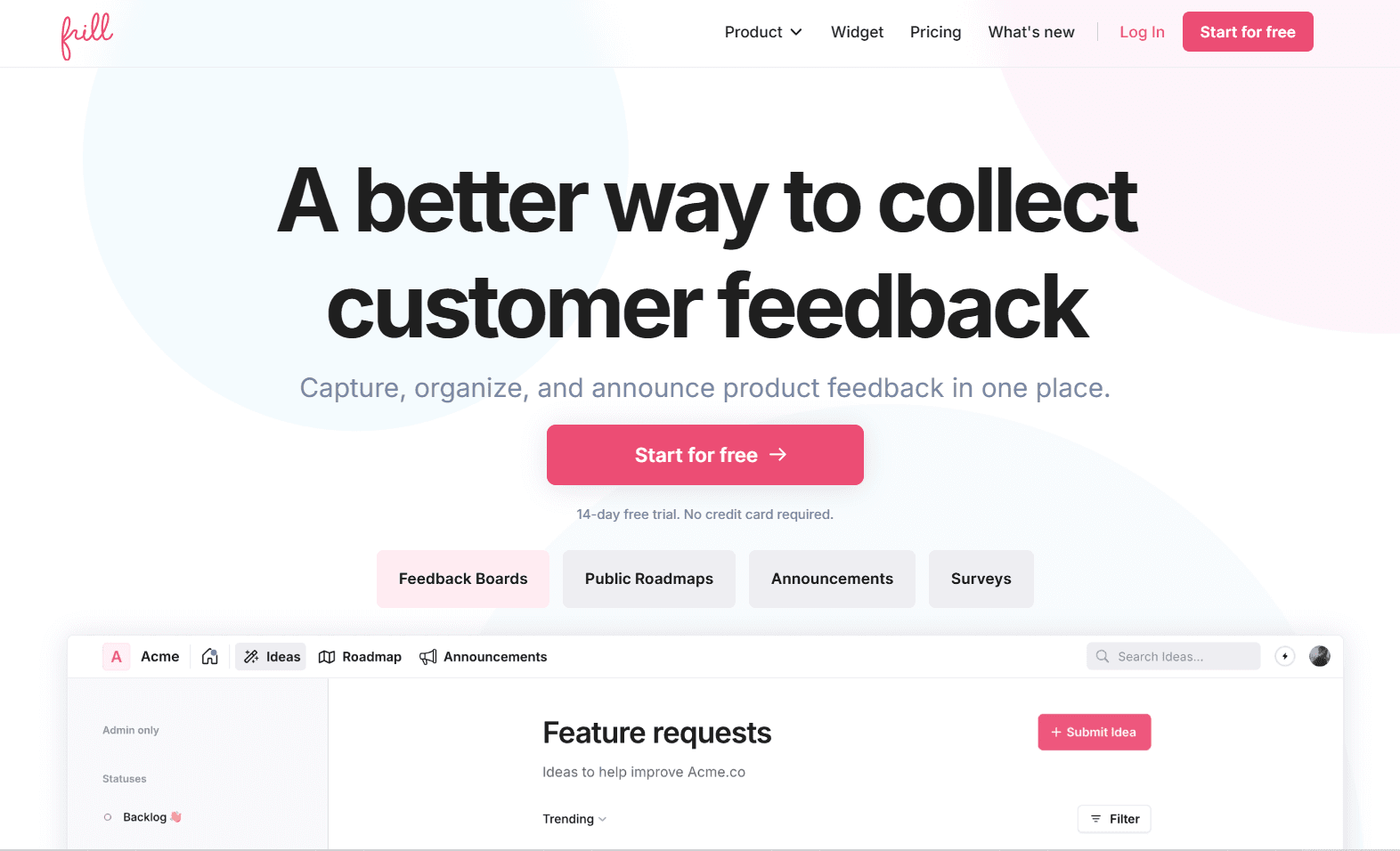
Choose Frill for NPS because it’s simple, fast to set up, and elegant, with customizable widgets, seamless integrations, and powerful feedback management that turns customer insights into actionable product decisions.
2. Delighted by Qualtrics
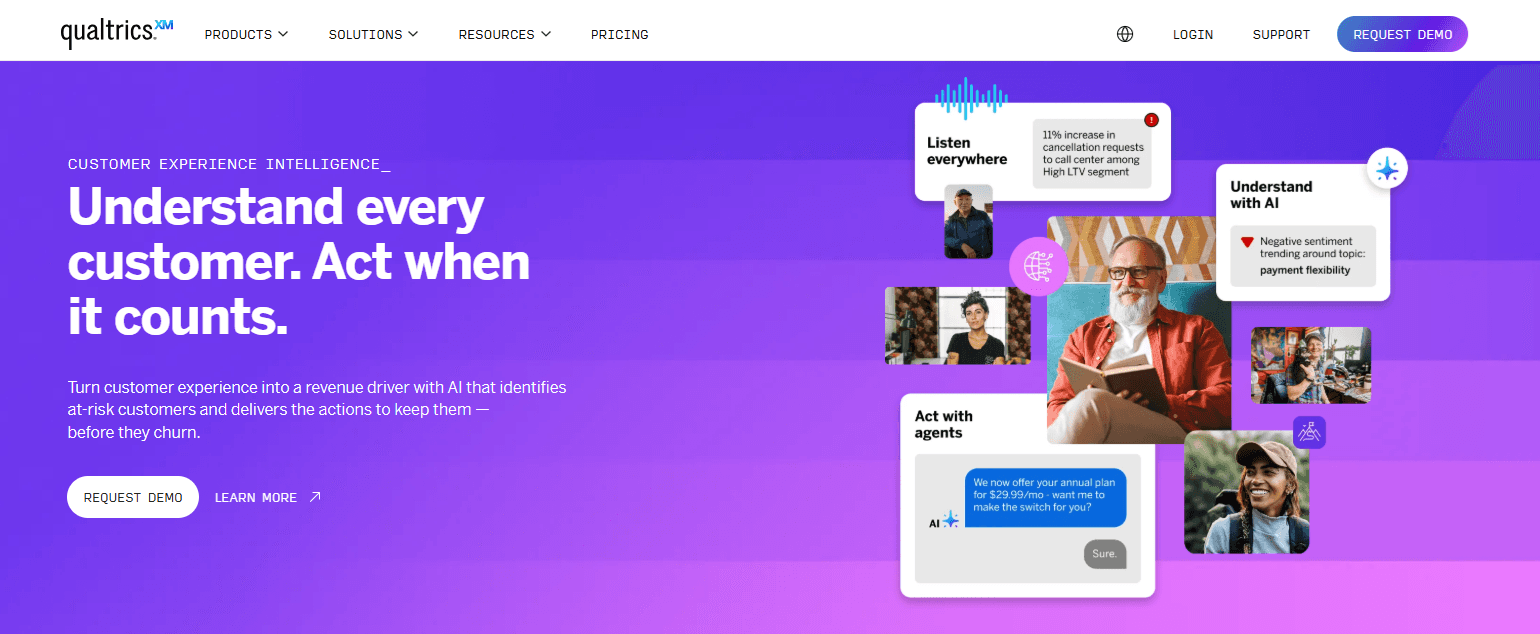
Delighted supports NPS by letting businesses easily collect, analyze, and act on customer feedback in real time, with automated surveys, integrations, and actionable insights to improve loyalty.
3. Beamer
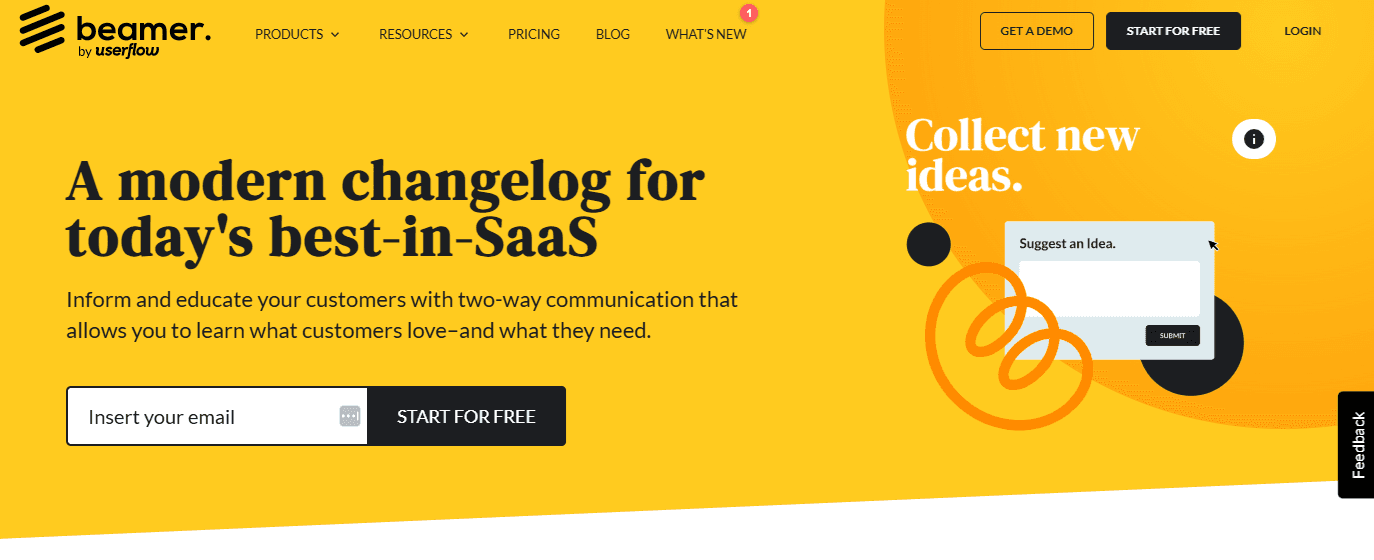
Beamer works for NPS by letting you send surveys in-app, via email, or links to reach users wherever they are. It tracks responses, segments audiences, and provides analytics to identify promoters, measure satisfaction, and act on feedback to improve product experience and engagement.
Frequently asked questions
What is the standard NPS survey question?
The standard NPS survey question asks: “On a scale of 0–10, how likely are you to recommend our company, product, or service to a friend or colleague?” It measures loyalty.
Why does the NPS survey use a 0–10 scale?
The NPS survey uses a 0–10 scale to clearly differentiate promoters, passives, and detractors, providing a simple, consistent way to measure customer loyalty and calculate the overall Net Promoter Score.
What is a good Net Promoter Score?
A good Net Promoter Score (NPS) typically falls between 30 and 70. Scores above 50 indicate strong customer loyalty, while anything above 70 is considered excellent and reflects very high satisfaction.
How often should you send NPS surveys?
You should send NPS surveys at key moments in the customer journey, such as after onboarding, purchases, or support interactions, and at regular intervals like quarterly or biannually to track long-term loyalty trends.
What follow-up question should you ask after the NPS survey question?
After the NPS survey question, you should ask open-ended follow-up questions like “What is the main reason for your score?” or “What could we do to improve your experience?” These provide context and actionable insights.
Ready to get closer to your customers? Frill offers NPS surveys, idea boards, public roadmaps, and announcements so you can build what users want. Learn more about Frill and try it free here.

Dayana Mayfield
Dayana Mayfield is a B2B SaaS copywriter who believes in the power of content marketing and a good smoothie. She lives in Northern California.